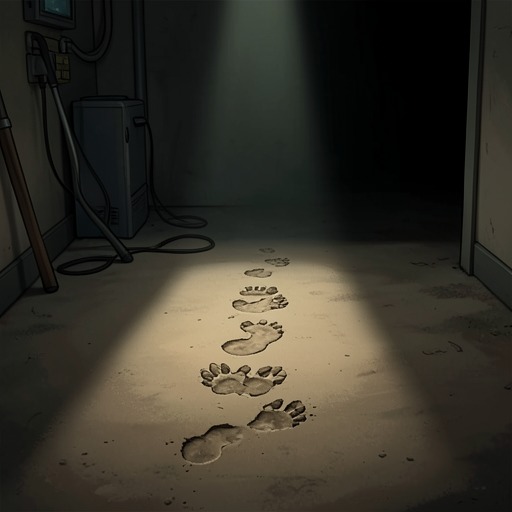
Grete's rejection of Gregor
The MetamorphosisGrete's rejection of Gregor is the decisive rupture in the Samsa family's response to Gregor Samsa's transformation. It begins as a practical reaction to the household's exhaustion and the loss of its tenants, but becomes a categorical denial of Gregor's identity: Grete argues that the creature in Gregor Samsa's room is no longer her brother and must be removed. Her words reorganize the family's emotions, redefine its obligations, and immediately precede Gregor Samsa's final withdrawal and death.
Causes and Background
The rejection grows out of a family structure already shaped by dependence and debt. Before his transformation, Gregor Samsa had worked with intense commitment after the collapse of Mr. Samsa's business, advancing from junior salesman to travelling representative and placing his earnings on the table for the family. Although Mr. Samsa had secretly retained some money from the failed business, Gregor believed that he alone had carried the household financially. His labor supported his parents and Grete Samsa, while his private plan to send Grete to the conservatory expressed the remaining warmth in their relationship.
After the transformation, that arrangement reversed. Gregor became confined to his room, while the family had to reorganize its labor. For the first fourteen days, Mr. and Mrs. Samsa could not bring themselves to enter the room; Grete handled the cleaning, food, and reports about Gregor's condition. Her parents waited outside for accounts of what he had eaten, how he had behaved, and whether there was any improvement. This care preserved a fragile idea of Gregor as a family member, but it also placed the daily burden of managing his body chiefly on Grete.
The family gradually entered paid work, and Grete took a sales job while studying shorthand and French in the evenings. The household therefore came to depend less on Gregor's former income and more on the labor of its remaining members. At the same time, Gregor's condition worsened. His father's apple remained lodged in his flesh for more than a month, permanently reducing his mobility; he became an invalid who could crawl only slowly and could no longer move across the ceiling. The wound made him visibly vulnerable, but it did not restore ordinary communication or remove the family's fear of him.
The Lodgers and the Immediate Crisis
The immediate setting for Grete's declaration is the failure of the family's attempt to maintain an orderly household by taking in three lodgers. During Grete's violin performance, Gregor moved into the shared living space, drawn toward the music and hoping to express his connection with his sister. The middle lodger pointed at him, and Mr. Samsa hurried to block the men's view while trying to drive Gregor away. The lodgers, however, demanded an explanation and treated the discovery of Gregor as evidence of intolerable conditions.
The middle lodger immediately gave notice, declared that he would pay nothing for his room, and threatened to consider an action for damages. His two companions followed him in giving immediate notice. Their departure destroyed the family's financial arrangement and exposed the impossibility of keeping Gregor's presence hidden while also preserving the appearance of a respectable home. Mr. Samsa collapsed into his chair, and Gregor, weakened by hunger and disappointment, lay still, unable to move.
This failure also changes the meaning of Grete's earlier care. She had once been the person who entered Gregor's room, protected him from unnecessary exposure, and tried to make the space usable for his altered body. Now the same household activity is experienced as an unbearable obligation. The family has continued to feed and shelter Gregor, but its patience is no longer joined to hope for recovery, and the lodgers' rejection makes the cost of that patience publicly and economically unmistakable.
Grete's Declaration
Grete begins by addressing Mr. and Mrs. Samsa after the lodgers have withdrawn. She strikes the table and says that the family cannot continue in this condition. She refuses to call the creature her brother, insists that the family has done everything humanly possible to care for it, and maintains that no one could accuse them of having failed in patience. The wording presents the demand for removal not as an impulsive act of cruelty but as the conclusion of an exhausted record of service.
Her argument becomes more severe when she turns specifically to Mr. Samsa. She says that the creature's presence will bring about the death of both parents, that the family cannot work all day and return home to be tortured, and that she herself can endure no more. Her tears run down Mrs. Samsa's face as Mrs. Samsa mechanically wipes them away. The scene makes Grete both advocate and sufferer: she speaks with certainty about what must be done, yet her distress shows that the decision is not emotionally simple.
Mr. Samsa asks what they are to do, and Grete's first response is helplessness. He then wonders whether an arrangement might be possible if Gregor could understand them. Grete vigorously denies that possibility. Her judgment is based not only on Gregor's appearance but on the collapse of reciprocal speech: the family can no longer negotiate with him, and his attempts to communicate have become unintelligible to them.
Grete then states the decisive principle of the rejection. The family must stop thinking that the creature is Gregor. If it were really Gregor, she argues, he would have understood that human beings cannot live with such an animal and would have gone away voluntarily. In her formulation, brotherhood is no longer established by memory, family history, or Gregor's inward attachment; it is measured by the ability to recognize the family's needs and remove oneself. Once Gregor fails that test, Grete says, the family may remember the former Gregor with respect and continue its life.
Gregor's Withdrawal and Death
Grete's rejection is intensified by a misunderstanding. Gregor has not intended to frighten anyone; he has only begun the painful process of turning around so that he can return to his room. Because his injuries make turning extraordinarily difficult, he repeatedly raises his head and strikes it against the floor. Grete interprets this movement as a renewed threat, while Gregor understands it as an effort to comply with the family's wishes.
When the family stops driving him, Gregor slowly turns and crawls toward the doorway. He is astonished by the distance to his room and scarcely notices the silence around him. His mother is exhausted in her chair, his sister stands beside Mr. Samsa, and no one speaks as he makes his way back. Grete then rushes forward, shuts the door, bolts it, and locks it behind him, saying loudly to her parents, "At last!" The locked door gives physical form to the decision she has just articulated: Gregor is inside the apartment but excluded from the family's shared space.
Inside the darkness, Gregor discovers that he can no longer move. His body aches, but the pain is weakening; he can barely feel the decayed apple or the inflamed area around it. He thinks of his family with emotion and love and concludes that, if departure is necessary, he feels it even more strongly than Grete does. Near three in the morning, as daylight begins outside the window, his head sinks and his last breath leaves him.
Consequences and Significance
The family receives Gregor's death as a release from an intolerable condition. The Charwoman discovers the body by poking it with a broom and announces that it is dead. Mr. and Mrs. Samsa and Grete enter the room, and Mr. Samsa gives thanks to God. Grete observes that Gregor has become thin because he had eaten so little; his body is dried up and flat. The response confirms how completely the household has shifted from interpreting Gregor as a person in need of care to viewing him as a burdensome body whose disappearance restores order.
The rejection therefore has a direct causal consequence beyond the words spoken at the table. Once Gregor accepts the family's demand and dies, the family dismisses the Charwoman, resumes practical decisions, and prepares to leave the apartment for a walk. Mr. Samsa asks his wife and daughter to attend to him, and the two women embrace him. The family has not merely survived Gregor's absence; it has recovered a shared rhythm that had been impossible while his presence remained an unresolved obligation.
On the tram, the family discovers that its prospects are better than expected. Mr. Samsa, Mrs. Samsa, and Grete all hold jobs with promising futures, and they begin planning to move to a smaller, cheaper, better-located apartment. Their discussion turns toward Grete's future as well: her parents recognize that she is becoming a strong and beautiful young woman and silently agree that it will soon be time to find her a suitable husband. Grete's rejection thus marks the final transfer of the family's attention from Gregor's needs to its own renewal.
The episode is significant because it exposes the conflict between family membership and usefulness. Gregor remains emotionally attached to the family even after he can no longer work, speak clearly, or inhabit shared domestic space. Grete's demand does not erase that inward continuity, but it denies that inwardness any social force. The family's inability to understand him becomes proof, in Grete's reasoning, that he is no longer Gregor; his death is then treated as the condition for the family's return to ordinary life. The rejection is consequently both a personal betrayal and the household's final act of reclassification: the former provider and brother becomes an excluded presence, and his removal makes the family's economic and social future imaginable again.